

What to Eat After Dental Implant Surgery (Recovery Diet Plan)
April 27, 2026
Dental Implants
Healing after a dental procedure does not need to be complicated. Yet many people struggle with daily food decisions right after surgery. One wrong bite can lead to discomfort or delay healing.
This guide breaks everything down into simple steps. You will know what to eat from day one to full recovery, along with easy meal ideas that fit your routine in Matthews.
What Your Body Needs After Implant Surgery
Healing starts from within. Your body needs the right nutrients to repair tissue and reduce inflammation. Food is not just about comfort. It directly supports recovery.
After surgery, your gums and surrounding bone begin healing immediately. Soft tissue repairs first, followed by bone integration. This process takes time and proper nutrition.
In patients receiving a dental implant in Matthews, NC, recovery outcomes improve when the diet supports healing rather than stressing the surgical site.
Focus on foods that are soft, easy to chew, and nutrient-rich. Avoid anything that creates pressure, heat, or irritation.
The First 24 to 72 Hours: Keep It Soft and Simple
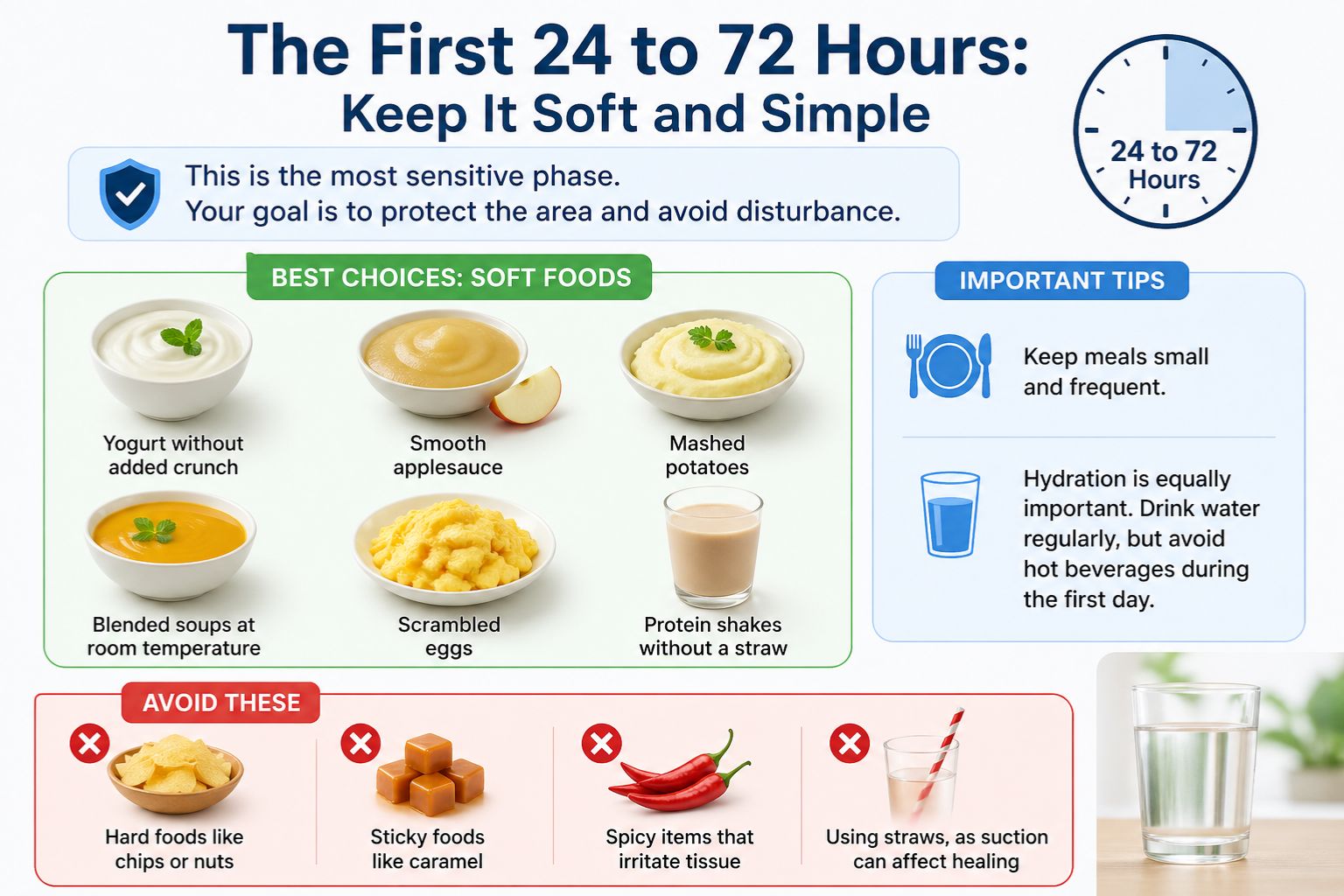
This is the most sensitive phase. Your goal is to protect the area and avoid disturbance.
Stick to very soft foods such as:
- Yogurt without added crunch
- Smooth applesauce
- Mashed potatoes
- Blended soups at room temperature
- Scrambled eggs
- Protein shakes without a straw
Keep meals small and frequent. Do not chew near the surgical site.
Hydration is equally important. Drink water regularly, but avoid hot beverages during the first day.
Avoid:
- Hard foods like chips or nuts
- Sticky foods like caramel
- Spicy items that irritate tissue
- Using straws, as suction can affect healing
Days 3 to 7: Gradual Progress
As swelling reduces, you can slowly introduce slightly firmer foods. The key is to stay cautious.
You can start adding:
- Soft pasta
- Rice
- Oatmeal
- Steamed vegetables
- Soft fruits like bananas
If you are walking through areas like Matthews Community Farmers Market, you may find fresh, soft produce that fits well into your recovery diet.
Continue to avoid chewing directly on the treated side. If you feel discomfort, step back to softer foods.
Week 2 and Beyond: Returning to Normal
By this stage, most people feel more comfortable. However, healing is still ongoing beneath the surface.
You can begin adding:
- Soft meats like shredded chicken
- Cooked fish
- Soft bread
- Light sandwiches
Chew slowly and stay mindful. Avoid biting into hard foods directly.
Even if you feel better, avoid:
- Crunchy snacks
- Tough meats
- Extremely hot foods
Your dentist will guide you on when you can return fully to your normal diet.
Nutrients That Support Healing
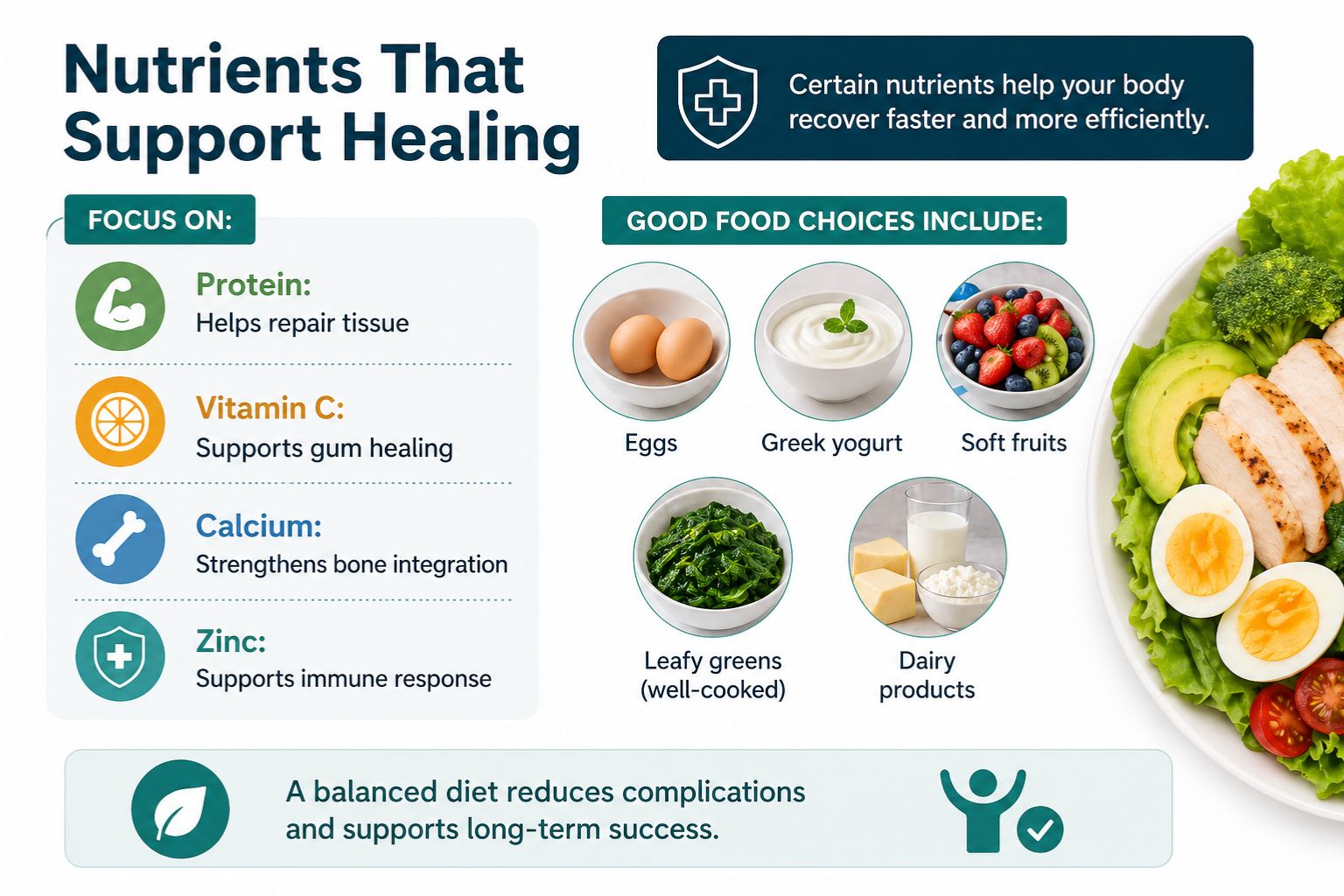
Certain nutrients help your body recover faster and more efficiently.
Focus on:
- Protein: Helps repair tissue
- Vitamin C: Supports gum healing
- Calcium: Strengthens bone integration
- Zinc: Supports immune response
Good food choices include:
- Eggs
- Greek yogurt
- Soft fruits
- Leafy greens (well-cooked)
- Dairy products
A balanced diet reduces complications and supports long-term success.
Foods You Should Avoid During Recovery
Some foods can interfere with healing or cause irritation. Avoid these until your dentist clears you.
- Hard foods that require strong chewing
- Crunchy snacks that can get lodged
- Sticky foods that pull on the implant area
- Acidic foods that may cause sensitivity
- Alcohol during early healing
Even everyday habits, like snacking while walking along the Four Mile Creek Greenway, should be approached carefully during recovery.
Simple Meal Ideas for Easy Recovery
Keeping meals simple makes recovery easier.
Breakfast:
- Scrambled eggs with soft toast
- Oatmeal with mashed banana
Lunch:
- Blended vegetable soup
- Soft pasta with light sauce
Dinner:
- Steamed fish with mashed potatoes
- Rice with soft-cooked vegetables
Snacks:
- Yogurt
- Smoothies
- Applesauce
These meals are easy to prepare and gentle on your mouth.
Small Habits That Make a Big Difference
Recovery from a dental implant in Matthews, NC, is not just about food. Daily habits matter.
- Eat slowly and chew carefully
- Keep your mouth clean as instructed
- Stay hydrated
- Avoid smoking
- Follow all post-care instructions
If you notice pain, swelling, or unusual symptoms, consult your dentist promptly.
A Steady Recovery Leads to Better Results
Healing after implant surgery does not require complex steps. It requires consistency. When you choose the right foods and follow simple precautions, recovery becomes smoother and more predictable.
Your body is doing important work during this time. Supporting it with the right diet helps protect your results and reduces discomfort.
Conclusion: Take Care Now for Long-Term Comfort
Recovery from a dental implant in Matthews, NC is brief, but your results are long-term. The way you eat during these days directly affects healing and comfort. Staying mindful now helps avoid complications later.
If you have questions or need guidance about your recovery, our team at Dawson Modern Dentistry is here to help you move forward with confidence.
Ready to plan your recovery the right way? Schedule a visit with Dawson Modern Dentistry and get clear guidance tailored to your needs. Your comfort and healing matter at every step.
Common Questions People Ask
- How soon can I eat after implant surgery?
You can eat once the numbness wears off. Start with soft foods and avoid chewing near the treated area. Stick to gentle foods for the first few days to protect healing.
- Can I drink coffee after the procedure?
It is best to avoid hot beverages for the first 24 hours. Heat can increase sensitivity and affect healing. You can reintroduce warm drinks gradually after that.
- Is it normal to have difficulty eating?
Yes, mild discomfort and limited chewing are common initially. This improves within a few days. Choosing soft foods helps reduce strain on the area.
- Can I eat solid food after one week?
You can slowly introduce soft solids after a week. Avoid hard or crunchy foods until your dentist confirms complete healing.
More Blog Posts
August 24, 2026
Your Smile Makeover Awaits: What Happens at Each Bonding Appointment

August 17, 2026
Unbearable Tooth Pain at 2 AM: Your Real Options Right Now
August 10, 2026
Make Your Dental Crown Last: The Complete Care Guide for Matthews Patients

August 3, 2026
Midnight Tooth Pain: Your Real Options Beyond the ER Visit

July 27, 2026