
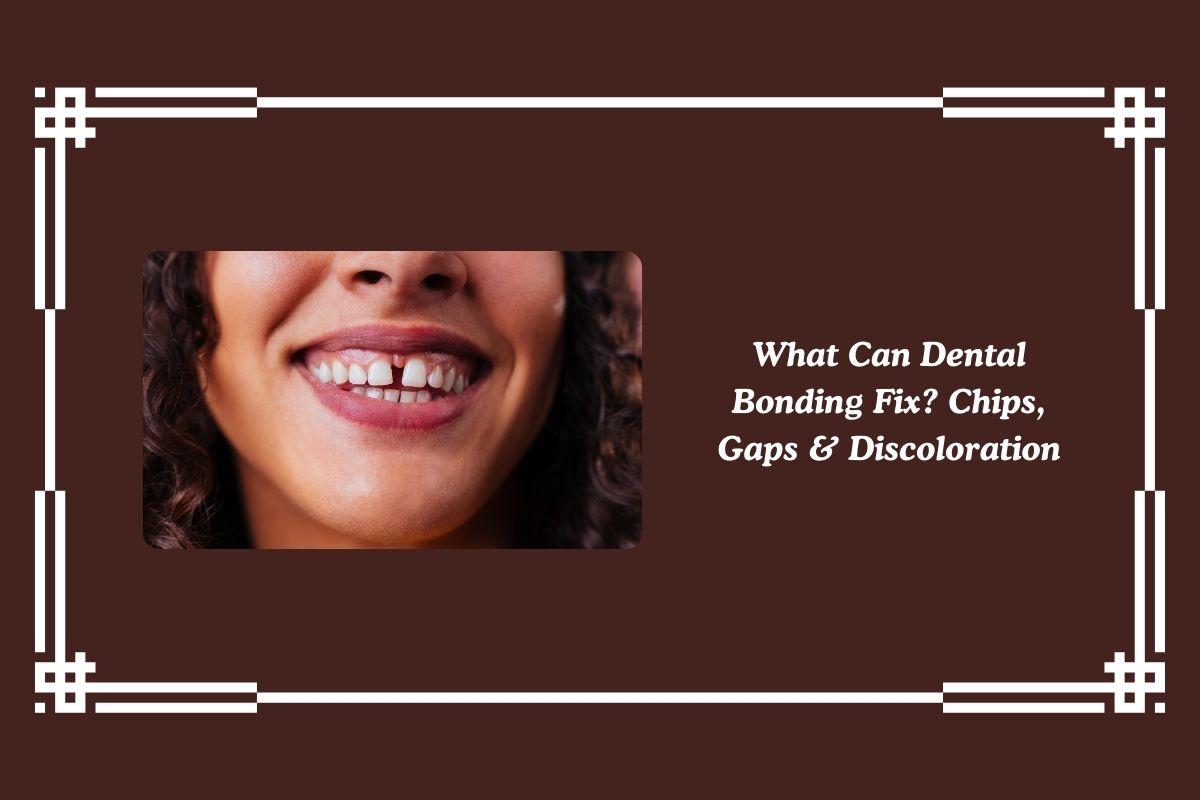
What Can Dental Bonding Fix? Chips, Gaps & Discoloration
February 16, 2026
Dental Bonding
You’re brushing your teeth one morning and catch a small chip in the mirror. Maybe it happened after biting into something hard, or perhaps you’ve always noticed a tiny gap between your front teeth. Others might see discoloration that whitening treatments never fully improved. These small cosmetic concerns often seem minor, yet they can quietly affect how comfortable you feel when smiling or speaking with others.
Fortunately, modern cosmetic dentistry offers simple ways to address these issues. One commonly used option is dental bonding, a quick treatment that restores the appearance of teeth without complicated procedures.
In this blog, we’ll explore how this treatment works, what types of cosmetic concerns it can improve, and who may benefit from it. We’ll also discuss how long results can last and what you can do to maintain them. For many patients visiting Dawson Modern Dentistry, it has become a convenient way to refresh their smile with minimal changes to their natural teeth.
What Is Dental Bonding?
This treatment is a cosmetic procedure that improves the appearance of teeth using a tooth-colored composite resin. The material is carefully shaped and attached to the surface of the tooth to correct minor flaws while maintaining a natural look.
The composite resin used in this treatment is similar to the material commonly used for tooth-colored fillings. It is designed to mimic the color and translucency of natural enamel, which helps the repaired area blend seamlessly with surrounding teeth. Once applied, the material is hardened with a special curing light, creating a durable surface that restores both shape and appearance.
One reason many patients choose dental bonding in Matthews is that it is considered a conservative cosmetic treatment. Unlike veneers or crowns, it usually requires little to no removal of natural tooth structure. This allows the procedure to enhance the appearance of teeth while preserving their original integrity.
Another advantage is the simplicity of the process. In many cases, the entire procedure can be completed during a single visit. After selecting a shade that matches your natural tooth color, the dentist prepares the surface of the tooth and carefully applies the composite material. Once shaped and polished, the repaired tooth looks smooth, natural, and balanced with the rest of the smile.
Because the procedure is minimally invasive and efficient, it has become a practical option for individuals who want to correct small cosmetic imperfections without extensive dental work.
What Dental Problems Can Bonding Fix?
This treatment is commonly used to address minor cosmetic concerns that affect the appearance of teeth. While it is not designed for major structural repairs, it works extremely well for improving small imperfections that may otherwise draw attention when you smile.
Repairing Chipped Teeth
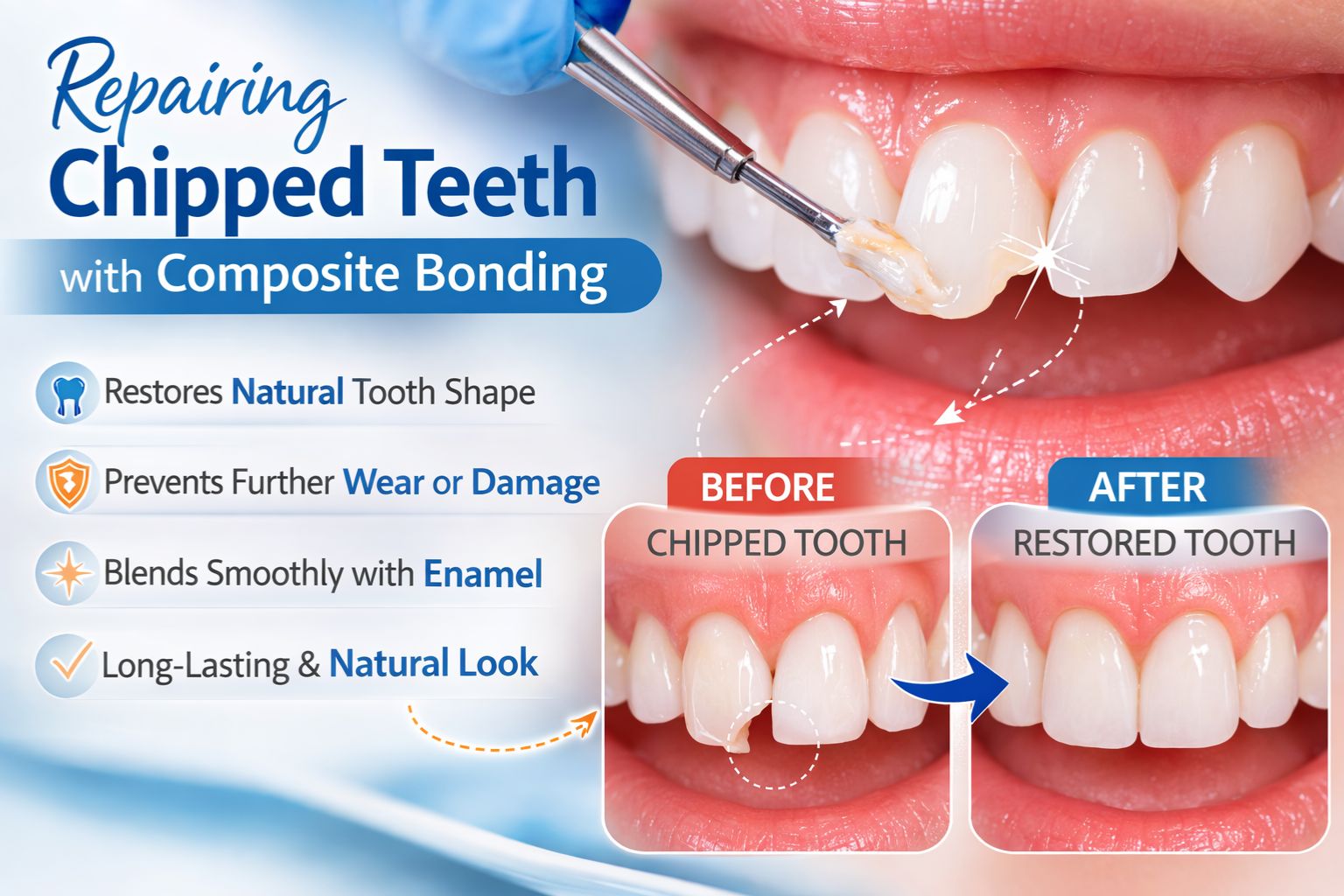
Chipped teeth can occur from everyday activities such as biting into hard foods, grinding teeth at night, or accidental impacts. Even small chips can make a tooth look uneven or rough.
Composite resin can rebuild the missing portion of the tooth by carefully filling the damaged area and shaping it to match the natural contour.
Benefits include:
- Restores natural tooth shape
- Prevents further wear or damage
- Blends smoothly with the surrounding enamel
Once polished, the repaired area typically looks very similar to the original tooth.
Closing Small Gaps Between Teeth
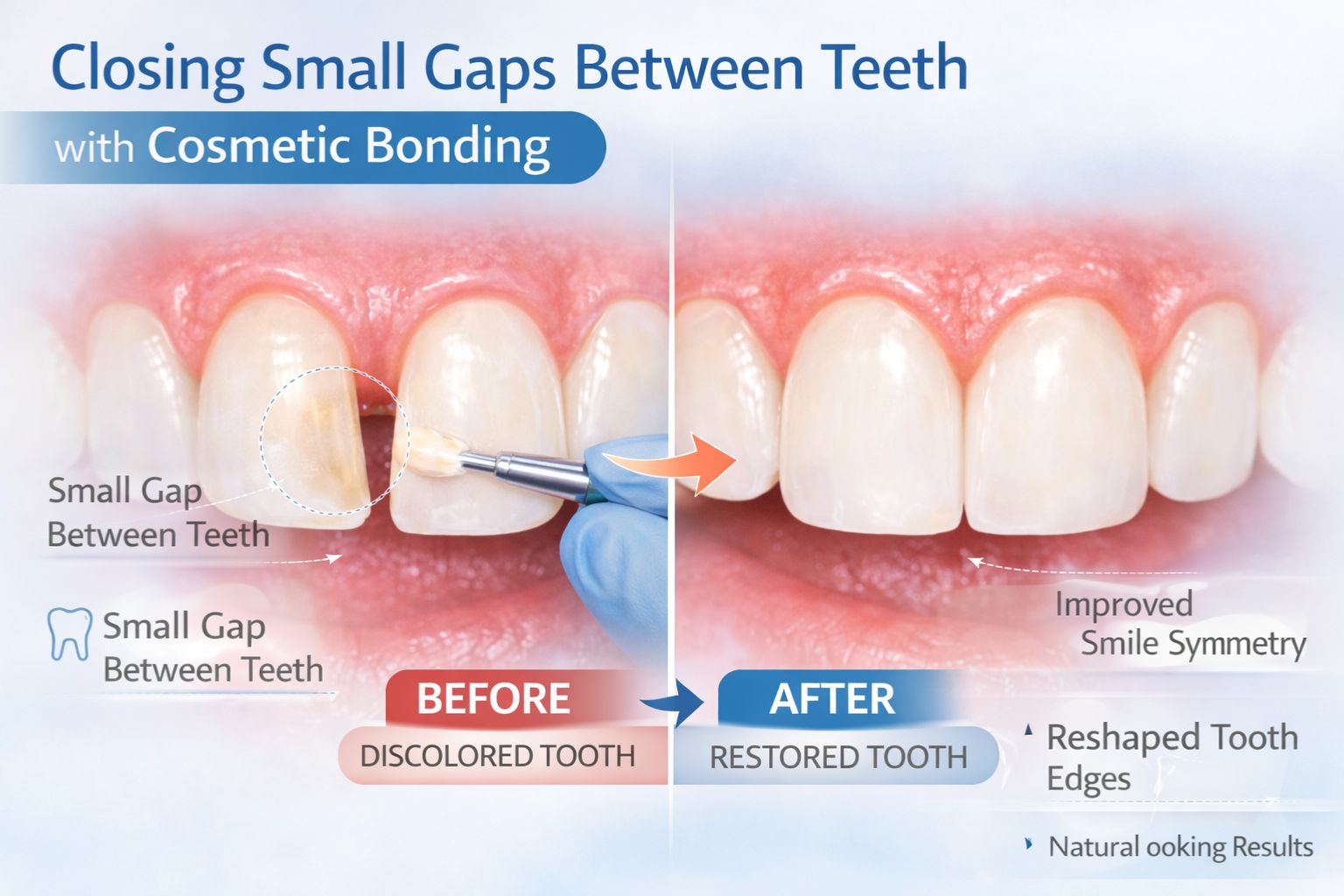
Small spaces between teeth are common and often harmless, but some people prefer a more uniform smile. Cosmetic bonding can fill these spaces by adding small amounts of resin to the edges of the teeth.
This approach works well for patients who want cosmetic improvement without orthodontic treatment.
It can:
- Improve smile symmetry
- Reshape slightly uneven teeth
- Often be completed in a single visit
Many patients appreciate that this solution can deliver visible improvements quickly.
Improving Tooth Discoloration
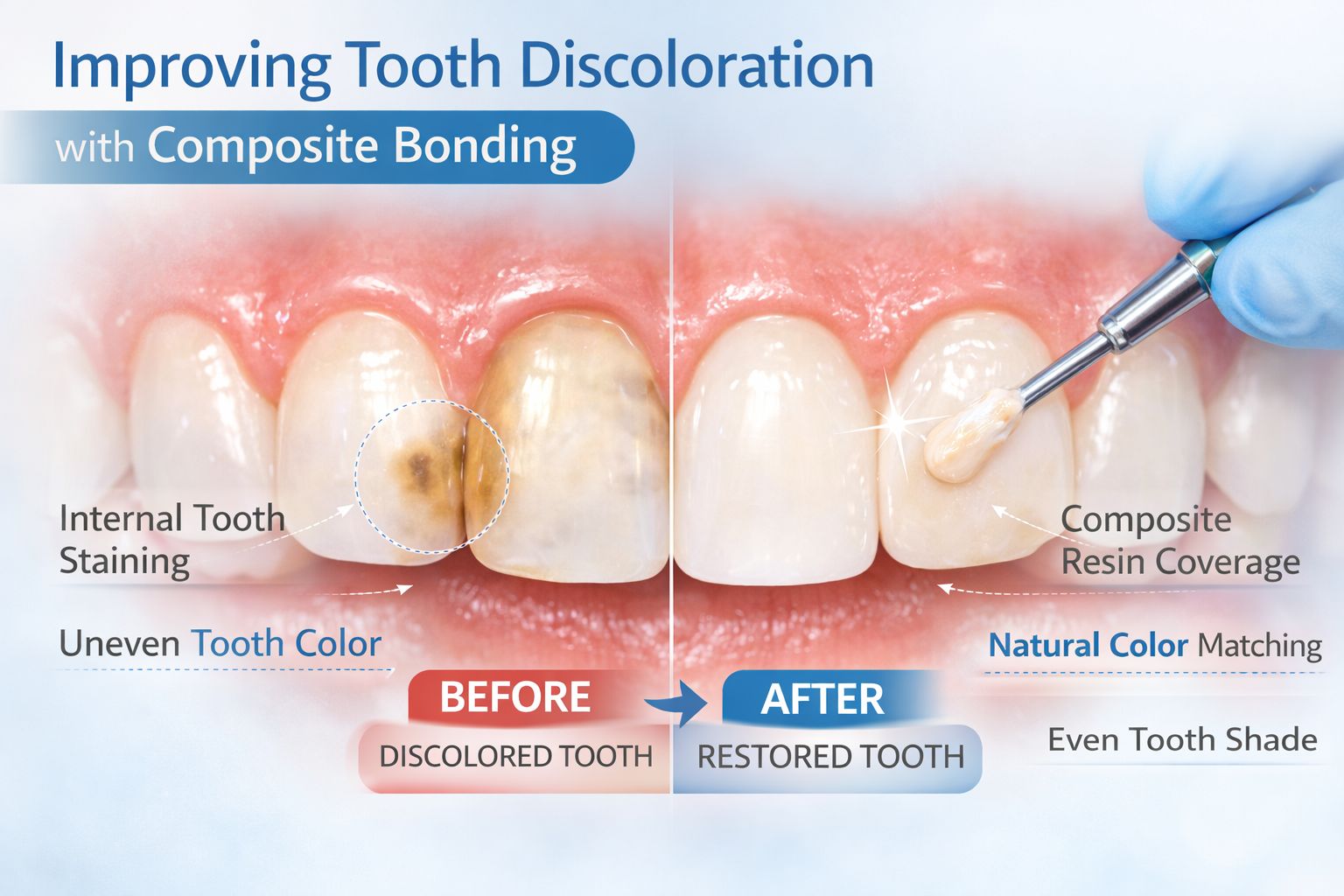
Not all stains respond well to whitening treatments. Some discoloration occurs beneath the enamel and may result from medication, past trauma, or enamel thinning.
In these cases, composite resin can cover darker areas and create a more even tooth color.
Examples include:
- Deep internal staining
- Discoloration caused by certain medications
- Uneven or patchy tooth color
The material is color-matched to surrounding teeth, so the final result appears natural.
Reshaping Uneven or Worn Teeth
Over time, teeth may become slightly worn or uneven due to normal chewing or habits such as grinding. Cosmetic bonding can gently reshape these areas.
This treatment can:
- Adjust the length of a tooth
- Smooth, rough, or jagged edges
- Improve overall smile balance
These subtle changes often make a noticeable difference in the overall appearance of a smile.
How the Procedure Works
The process is straightforward and usually completed in one appointment. Most patients find it comfortable and relatively quick compared with other cosmetic treatments.
Step-by-Step Process
- Shade selection– The dentist chooses a resin color that closely matches your natural teeth.
- Surface preparation– The tooth is gently prepared so the material can adhere properly.
- Application of composite resin– The soft resin is placed onto the tooth.
- Shaping and sculpting– The dentist molds the material to create the desired shape.
- Curing light– A special light hardens the resin and bonds it to the tooth.
- Final polishing– The tooth is smoothed and polished to match the surrounding enamel.
The entire procedure is typically completed within 30 to 60 minutes per tooth. Because the treatment involves minimal preparation, anesthesia is often unnecessary unless it is being used to repair a cavity.
Patients often leave the appointment with an immediate improvement in their smile.
Who May Benefit From This Treatment?
A dental bonding in Matthews works best for people with small imperfections that affect the appearance of their teeth but do not require major restorative treatment.
Ideal candidates often include individuals with:
- Minor chips or cracks
- Small gaps between teeth
- Cosmetic discoloration
- Slightly uneven tooth shapes
For these concerns, bonding provides a fast and conservative way to improve the smile.
However, other treatments may be recommended for more complex issues. For example, larger areas of tooth damage might require crowns, while significant alignment problems may benefit from orthodontic treatment.
During a consultation, a dental professional can evaluate your smile and determine whether bonding or another treatment would provide the best results.
How Long Do Results Last?
The durability of this cosmetic repair can vary depending on several factors. With proper care, results often last between three and ten years.
Longevity may depend on:
- Daily oral hygiene habits
- Dietary choices and staining foods
- Teeth grinding or clenching
Composite resin is strong, but it is not as resistant to staining as natural enamel or porcelain. Beverages such as coffee, tea, and red wine may gradually darken the material over time.
Regular dental visits also help extend the lifespan of the repair. During routine exams, dentists can check the bonded area and polish it if necessary to maintain its appearance.
If the material eventually wears or chips, it can often be repaired or replaced relatively easily.
How to Maintain Bonded Teeth
Maintaining the appearance of repaired teeth requires many of the same habits that protect natural enamel.
Helpful care tips include:
- Brush and floss daily to remove plaque
- Avoid biting hard objects like ice or pens
- Limit foods and drinks that cause staining
- Visit the dentist regularly for cleanings and exams
Patients in the community around Dawson Modern Dentistry often incorporate these habits into their daily routines while enjoying local favorites, from morning coffee stops to dining in nearby neighborhoods. Taking a few precautions can help preserve the natural look of bonded teeth for many years.
When Should You Consider Cosmetic Repair?
You may want to explore this treatment if you notice small imperfections that affect your smile but do not require major dental work.
It may be worth considering when you have:
- Minor cosmetic flaws
- Small chips or uneven edges
- Slight gaps between teeth
Many people choose bonding because it offers a quick improvement in appearance while maintaining their natural teeth.
A consultation with Dawson Modern Dentistry can help determine whether this option fits your goals and provide personalized recommendations.
Small imperfections such as chips, gaps, or discoloration can make a noticeable difference in how your smile looks. Cosmetic bonding offers a practical solution that restores shape and color while preserving natural tooth structure. Because the procedure is quick and minimally invasive, many patients appreciate how easily it fits into their routine.
If you’ve been considering ways to refresh your smile, a consultation can help you understand your options and determine what approach may work best for your needs. The team at Dawson Modern Dentistry can evaluate your teeth and discuss treatments designed to create natural-looking results that support long-term oral health.
What People Ask
How long does dental bonding take?
Most bonding procedures take about 30 to 60 minutes per tooth. Many patients can complete the entire treatment during a single dental visit.
Can dental bonding stain over time?
The material can stain slightly over time, especially with frequent exposure to coffee, tea, or red wine. Good oral hygiene helps maintain its appearance.
Do bonded teeth require special care?
No special care is needed. Brushing, flossing, and routine dental checkups are usually enough to maintain the appearance and durability of the bonded tooth.
How soon can I eat after dental bonding?
You can usually eat right after the procedure. However, dentists may recommend avoiding very hard foods for the first day to protect the repaired area.
Does dental bonding look natural?
Yes. The composite resin is matched to the color of your natural teeth, allowing the repaired area to blend smoothly with the surrounding enamel.
More Blog Posts
August 24, 2026
Your Smile Makeover Awaits: What Happens at Each Bonding Appointment

August 17, 2026
Unbearable Tooth Pain at 2 AM: Your Real Options Right Now
August 10, 2026
Make Your Dental Crown Last: The Complete Care Guide for Matthews Patients

August 3, 2026
Midnight Tooth Pain: Your Real Options Beyond the ER Visit

July 27, 2026