
How Long Do Dental Fillings Last?
March 5, 2026
Dental Fillings
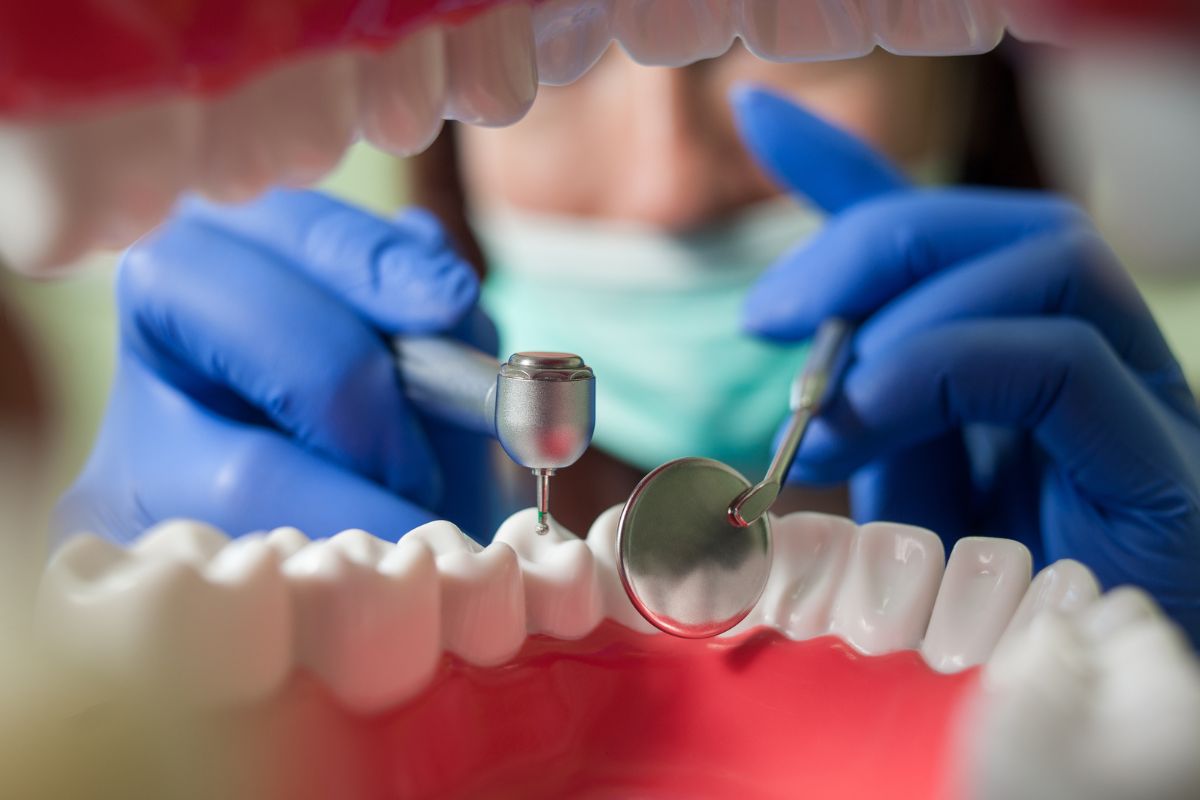
Many people who have had a cavity treated eventually ask the same question: how long will that repair actually last? It is a reasonable concern. When a tooth is restored, most patients hope the restoration will last for many years without problems. While restorations are designed to be durable, their lifespan can vary depending on several factors.
A filling is used to repair a tooth damaged by decay, minor fractures, or wear. The material seals the affected area and restores the tooth’s shape and function. When cared for properly, dental fillings can serve patients reliably for years.
However, longevity depends on multiple elements, including the type of material used, daily oral habits, diet, and how consistently someone visits their dental provider for routine care. In this guide, we will explain how long dental fillings typically last, what influences their durability, and how you can protect them for the long term.
What Are Dental Fillings and Why Are They Needed?
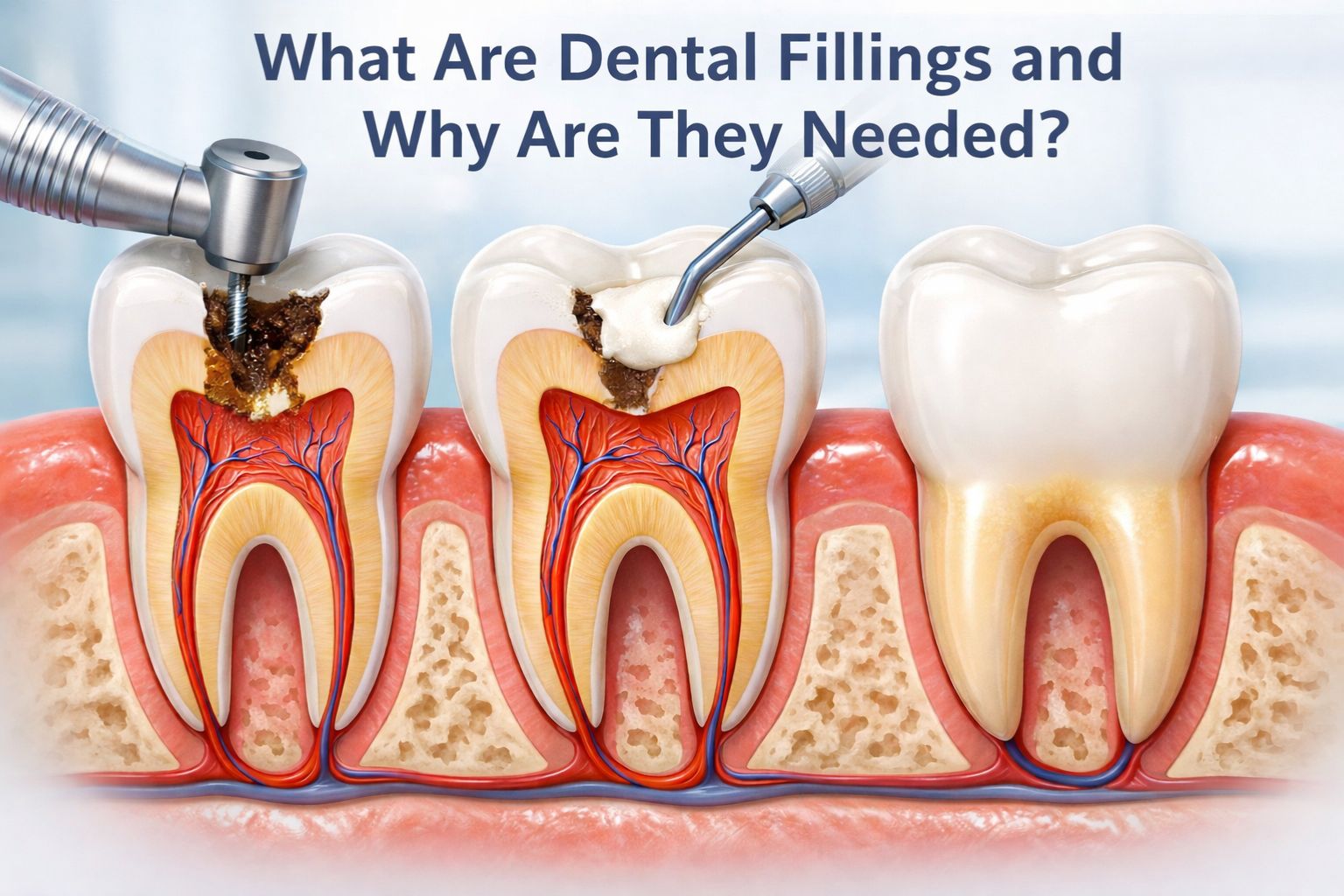
A cavity forms when bacteria in the mouth break down sugars and produce acids that weaken tooth enamel. Over time, these acids create small holes in the tooth surface. If left untreated, the decay can spread deeper into the tooth and eventually cause infection or severe damage.
A filling is used to repair this damage. After the decayed portion of the tooth is removed, the dentist cleans the area and places a restorative material that seals the space. This restores the tooth’s shape, helps it function normally during chewing, and prevents bacteria from entering the damaged area again.
Treating cavities early is important because it protects the remaining natural tooth structure. When the problem is addressed at the right time, a simple restoration can prevent more complex procedures later.
Dentists may use several different materials depending on the patient’s needs and the location of the tooth. Common options include:
Composite resin
This tooth-colored material blends naturally with surrounding enamel. It is frequently used for visible teeth because it provides a natural appearance while still offering strength.
Amalgam
This silver-colored material has been used for decades. It is highly durable and often chosen for molars that experience strong chewing pressure.
Ceramic or porcelain
These restorations offer both strength and a natural appearance. They are resistant to staining and are often used when aesthetics are important.
Gold
Although less common today, gold fillings remain one of the most durable options available.
By repairing the tooth and sealing it from further bacterial activity, this treatment plays an essential role in protecting long-term oral health.
How Long Do Different Types of Dental Fillings Last?
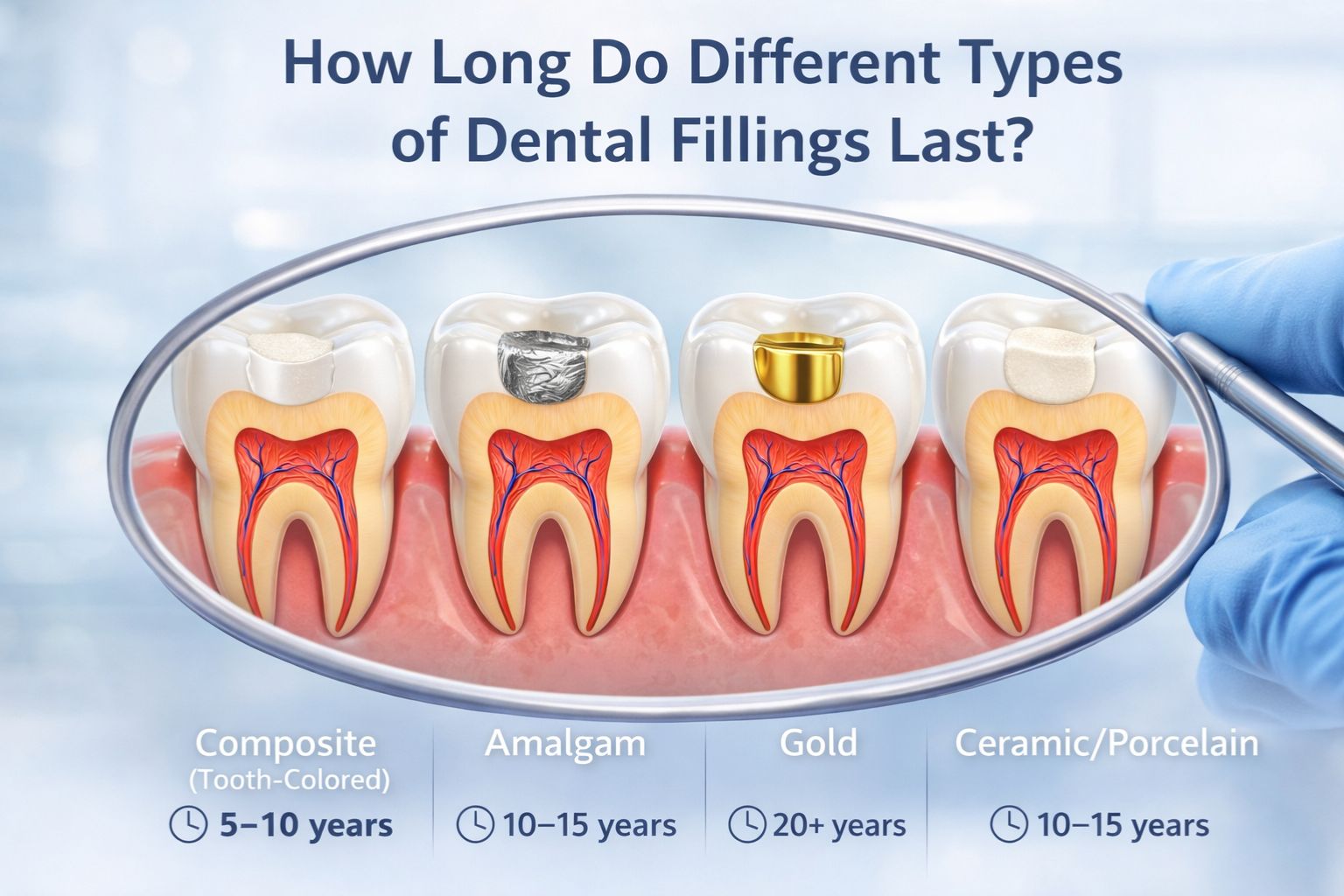
The lifespan of dental fillings in Matthews can vary based on the material used and how much stress the tooth experiences during everyday use.
Composite (Tooth-Colored) Restorations
Composite materials typically last five to ten years. They bond directly to the tooth surface, which helps preserve natural tooth structure. Because they are commonly used on front teeth or visible areas, they are valued for their natural appearance.
However, they may wear down slightly faster in areas where chewing pressure is high, such as the back molars.
Amalgam Restorations
Amalgam fillings are known for their durability. These restorations often last ten to fifteen years or longer, especially when placed in back teeth that handle heavy chewing.
They are resistant to wear and can withstand strong bite forces, which makes them a practical option for molars.
Gold Restorations
Gold restorations are among the longest-lasting options available. With proper care, they can remain functional for twenty years or more.
Gold is extremely strong and does not corrode easily, which contributes to its long lifespan. However, it is less commonly chosen today because of its metallic appearance.
Ceramic or Porcelain Restorations
Ceramic fillings usually last ten to fifteen years. These materials are strong and resistant to staining. They also provide a very natural look, making them a popular choice for visible areas.
Durability varies because every patient’s mouth is different. Bite pressure, oral hygiene habits, and even diet can influence how long a restoration remains intact.
Factors That Affect How Long Dental Fillings Last
Several everyday habits and oral health conditions influence how long a dental filling will remain effective.
Size and location of the restoration
Large restorations or those placed in molars experience greater chewing pressure and may wear faster.
Bite pressure and grinding
Patients who clench or grind their teeth place additional stress on their teeth and restorations.
Oral hygiene habits
Regular brushing and flossing help prevent decay from forming around the restoration.
Diet
Frequent consumption of sugary or acidic foods can increase the risk of new cavities.
Teeth grinding (bruxism)
Grinding can cause dental fillings to crack or wear down prematurely.
Quality of dental work
Proper placement and sealing of the restoration play a major role in its longevity.
Routine dental visits
Regular checkups allow dentists to monitor restorations and detect small problems before they worsen.
Even a strong restoration can fail prematurely if these factors are not managed properly.
Signs Your Dental Filling May Need Replacement
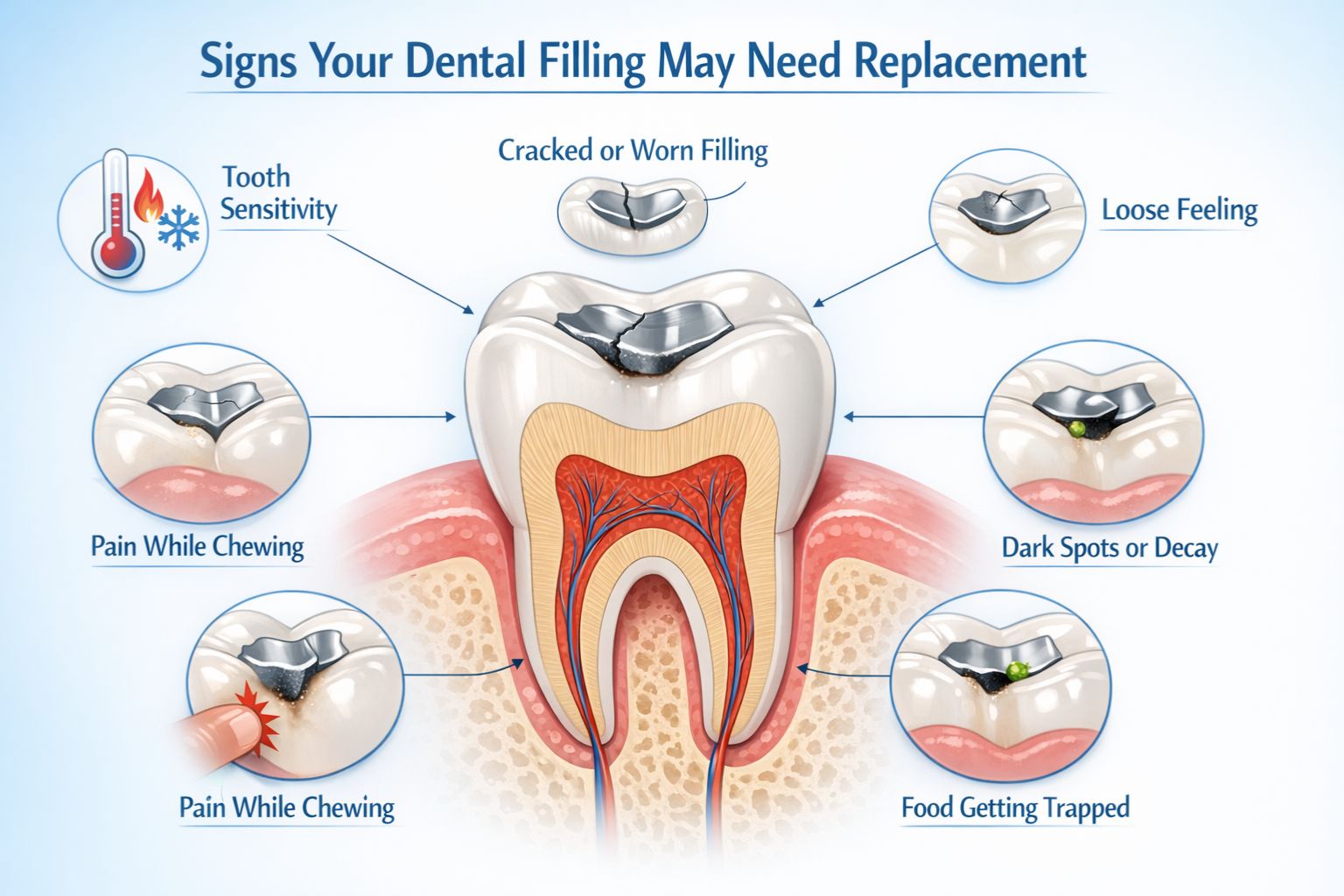
Although dental fillings are durable, they do not last forever. Over time, wear and tear can weaken them.
Patients may notice several warning signs when a restoration is beginning to fail.
Sensitivity to hot or cold
A worn or damaged restoration may expose sensitive tooth areas.
Pain while chewing
Discomfort when biting can signal a crack or shift.
Rough edges or cracks
These changes may allow bacteria to enter the tooth.
Dark spots near the restoration
Discoloration around the edges may indicate new decay.
Food getting trapped
Gaps around the restoration can create small pockets where food collects.
Loose feeling
A restoration that moves or feels unstable may require replacement.
Ignoring these symptoms can allow bacteria to spread deeper into the tooth, leading to more complex treatment.
How to Make Your Dental Fillings Last Longer
Simple daily habits can significantly extend the life of a dental filling.
Brush and floss daily
Removing plaque helps prevent new decay from forming around the restored tooth.
Schedule regular dental checkups
Routine visits allow early detection of wear or damage.
Avoid chewing ice or very hard foods
Hard objects can crack restorations.
Wear a night guard if you grind your teeth
A protective appliance reduces pressure on teeth during sleep.
Treat cavities early
Addressing small problems prevents further damage to restored teeth.
Many patients in Matthews enjoy outdoor activities at places like Amicalola Falls State Park or local community events downtown. Staying hydrated and maintaining consistent oral care routines during busy days can also help protect your teeth.
What Happens If a Filling Wears Out?
When a restoration begins to fail, replacing it quickly is important. A damaged filling can allow bacteria to enter the tooth again.
Dentists may recommend several treatment options depending on the extent of the damage.
Replacement restoration
If the damage is minor, the existing material can be removed and replaced.
Inlay or onlay
These custom restorations are used when a larger portion of the tooth needs reinforcement.
Dental crown
If the tooth structure has weakened significantly, a crown may be placed to restore strength and protect the tooth.
Prompt treatment prevents further decay and helps preserve the natural tooth for as long as possible.
Are Newer Dental Fillings More Durable?
Modern dental materials have improved significantly over the past two decades.
Today’s composite materials are stronger and more resistant to wear than earlier versions. Improved bonding techniques also allow dental fillings to attach more securely to the tooth surface.
Advanced dental technology allows dentists to shape and place restorations with greater precision. This helps create tighter seals and reduces the risk of bacteria entering the treated area.
Because of these improvements, many modern dental fillings in Matthews can last longer than those placed years ago. Regular checkups still play an important role in monitoring their condition.
When Should You See a Dentist About a Filling?
Patients should schedule an evaluation whenever they notice changes around a restored tooth.
Common warning signs include:
- Pain or pressure when chewing
- Sensitivity that does not go away
- Visible cracks or chips
- Changes in how the tooth feels during biting
Early evaluation allows small issues to be corrected before they become more serious.
Residents who enjoy local spots know how important it is to stay comfortable while eating and speaking. Healthy teeth make those everyday moments easier.
At Dawson Modern Dentistry, routine exams help monitor restorations and detect problems early so they can be addressed before they become larger concerns.
Dental fillings are designed to protect teeth for many years, and many patients keep them for a decade or longer. Their lifespan depends on several factors, including the material used, oral hygiene habits, and routine dental visits.
Maintaining good brushing and flossing habits, avoiding excessive bite pressure, and attending regular dental checkups all play a major role in protecting restored teeth. When monitored properly, small issues can be detected and corrected early.
If you have concerns about a restored tooth or would like to ensure your dental fillings remain in good condition, scheduling a visit can help. The team at Dawson Modern Dentistry can evaluate your oral health and recommend the best approach to keep your smile strong and comfortable.
People Also Ask
Can a filling last for 20 years?
Yes, some materials, such as gold or high-quality amalgam, can last 20 years or more. Good oral hygiene and avoiding excessive pressure on teeth can extend their lifespan.
Why do dental fillings wear out over time?
Fillings experience daily pressure from chewing and grinding, which can slowly cause wear. Over time, small cracks or gaps may develop that require replacement.
Can a filling fall out suddenly?
A filling can loosen or fall out if the surrounding tooth structure weakens or cracks. When this happens, the tooth should be evaluated quickly.
Can you eat normally after getting a filling?
Most patients can eat once the numbness wears off. It is usually recommended to avoid very hard foods for the first day.
Can teeth with fillings still be strong?
Yes, properly restored teeth can function normally for many years. The restoration helps support the tooth and protect it from further damage.
More Blog Posts
March 5, 2026
How Long Do Dental Fillings Last?

February 4, 2026
Composite vs. Amalgam Fillings: Which Is Better for Your Smile?
January 28, 2026
How to Know When Your Dental Crown Needs Replacement
January 19, 2026
Dental Crown Problems & How to Fix Them
January 12, 2026