

Composite vs. Amalgam Fillings: Which Is Better for Your Smile?
February 4, 2026
Dental Fillings
When it comes to dental care, choosing the right filling for your smile can make all the difference in both aesthetics and long-term health. Whether you’re dealing with a cavity or need a filling due to tooth damage, the material you choose will affect not just how your tooth looks but also how well it functions.
Composite and amalgam fillings are two of the most common options, each with its own set of benefits and drawbacks. The choice between them comes down to your specific needs, such as cosmetic appeal, strength, cost, and longevity.
In this blog, we’ll explore both options, breaking down their pros and cons, and help you make an informed decision about which is best for you. Let’s dive into the world of dental fillings!
What Are Composite and Amalgam Fillings?
Composite Fillings are made from a tooth-colored resin that can be matched to the natural shade of your teeth. This material is ideal for patients seeking a filling that blends seamlessly with the rest of their smile. Composite fillings are generally used for smaller cavities, especially those in the front teeth, where aesthetics are a priority. The resin is molded to the shape of the cavity and hardened with a special light, creating a strong bond with the tooth.
Amalgam Fillings, on the other hand, are made from a blend of metals including silver, mercury, tin, and copper. While amalgam has been used for over 150 years, it remains a popular option, particularly for larger cavities in the back teeth, where the focus is on durability rather than appearance. These fillings are known for their strength and longevity, handling the wear and tear from chewing and grinding.
Both types of dental fillings in Matthews have their place in modern dentistry, depending on the cavity’s size, location, and your personal preferences.
Advantages of Composite Fillings
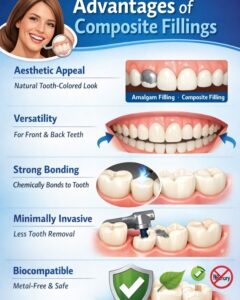
Aesthetic Appeal: One of the biggest advantages of composite fillings is their natural appearance. Because they are designed to match the color of your teeth, composite fillings are often the best choice for cavities in the front teeth. Unlike amalgam, which stands out with its silver color, composite fillings blend in seamlessly, making them nearly invisible.
Versatility: Composite fillings can be used for both front and back teeth, providing a strong, durable option for any area in need of repair. This versatility makes them an excellent choice for patients who want a more natural look throughout their entire mouth.
Bonding to Tooth: Composite fillings are chemically bonded to your teeth, providing a strong, lasting bond that helps reinforce the structure of the tooth. The bonding process also reduces the need for removing healthy tooth structure, which means less tooth material is sacrificed for the procedure.
Minimally Invasive: Unlike amalgam fillings, which require a larger portion of the tooth to be drilled away, composite fillings require less removal of healthy tooth structure. This makes the procedure less invasive, which can be a relief for patients seeking a gentler approach.
Biocompatibility: Composite fillings are generally safe for most patients, especially those with allergies to metals. As a non-metallic filling, they also avoid the potential concerns some patients have about mercury in amalgam.
Advantages of Amalgam Fillings
Durability: Amalgam fillings are known for their strength and ability to withstand the pressure of chewing and grinding. They are highly durable and can last 10-15 years, often making them the best choice for molars and back teeth, which undergo the most wear.
Cost-Effectiveness: One of the main advantages of amalgam fillings is their lower cost compared to composite fillings. If you’re looking for an affordable solution to tooth repair, amalgam offers a budget-friendly option that provides great value.
Resistant to Wear: Due to their metal composition, amalgam fillings are highly resistant to wear and are particularly effective at handling the constant pressure from chewing food. They won’t crack or break as easily as composite fillings can in high-stress areas.
Ease of Placement: Amalgam fillings are easier and quicker to place than composite fillings, particularly for larger cavities. They don’t require the tooth to be as clean and dry during placement, making them ideal for dentists who need to work efficiently in complex restorations.
Considerations for Choosing the Right Filling

When it comes to selecting the right filling for your smile, there are several important factors to consider. Your dentist will help guide you through these choices, but understanding the pros and cons of each option is essential to making an informed decision. Below, we break down the key factors to help you choose between composite and amalgam fillings.
Location of the Cavity: Front Teeth vs. Back Teeth
The location of the cavity plays a significant role in deciding which type of filling is best for you. Front teeth typically have higher cosmetic value, as they are the most visible when you talk or smile.
For these teeth, composite fillings are often the preferred choice. Their tooth-colored material blends seamlessly with the natural color of your teeth, giving you a more aesthetic result.
On the other hand, back teeth, which endure more pressure from chewing and grinding, may benefit from amalgam fillings. Amalgam is highly durable and resistant to wear, making it an ideal choice for larger cavities or fillings in the back of the mouth.
These fillings can withstand the constant pressure and stress placed on them from biting and chewing food. If you have a cavity in the back teeth and are more concerned with strength and longevity, amalgam may be the better option.
Personal Preferences: Cosmetic Appeal vs. Cost
Your personal preferences are crucial when deciding between composite and amalgam fillings. Cosmetic appeal is a primary concern for many patients, particularly when it comes to front teeth. Composite fillings offer a natural look, blending in with the surrounding tooth structure. If the appearance of your fillings is important to you, composite fillings may be the better choice.
Cost is another factor that may influence your decision. Amalgam fillings are typically more affordable than composite fillings. If you’re looking for a cost-effective option, especially for larger cavities or fillings in less visible areas, amalgam may be the more budget-friendly solution. However, it’s important to balance cost with your aesthetic needs and the longevity of the filling.
Longevity and Maintenance: How Long Each Type Lasts
The longevity of your dental fillings in Matthews is another critical consideration. Amalgam fillings are known for their durability and can last anywhere from 10 to 15 years with proper care. They are highly resistant to wear, making them a good choice for large cavities or teeth that experience significant chewing pressure. However, while they are long-lasting, they may require more maintenance over time, especially if the filling begins to crack or wear down.
In contrast, composite fillings typically last between 5 and 7 years. While they may not last as long as amalgam fillings, they tend to require less maintenance. Composite fillings may need to be replaced sooner, but they offer the advantage of being easier to repair if necessary, as they bond directly to the tooth structure.
When considering longevity, it’s important to weigh your priorities. If you’re looking for a filling that will last the longest without requiring frequent maintenance, amalgam may be the best option. However, if a natural-looking smile is your top priority, you may prefer composite fillings, understanding that they may need to be replaced sooner.
Health and Safety: Allergies and Mercury Concerns
For some patients, health and safety are the most important considerations. Amalgam fillings contain mercury, which can be a concern for some individuals, especially those with sensitivities to metals.
However, the American Dental Association (ADA) and other health organizations have confirmed that amalgam fillings are safe for the vast majority of people. Still, if you have concerns about the mercury content, composite fillings offer a mercury-free alternative.
Composite fillings are made from a resin-based material, which is non-toxic and generally safe for most patients. They are also considered to be hypoallergenic, making them an ideal choice for patients with metal allergies.
If you have concerns about the safety of mercury or prefer a biocompatible option, composite fillings may be a more appealing choice.
Your Dentist’s Recommendations: Role of Professional Guidance
While it’s essential to understand the benefits and drawbacks of both composite and amalgam fillings, your dentist’s recommendations will play a key role in your decision. Your dentist will consider factors such as the size and location of the cavity, your oral health, and any specific concerns you may have. They may also consider your overall dental history, including the condition of your existing fillings, to determine the best material for your new filling.
Your dentist will assess the size of the cavity, the amount of healthy tooth structure remaining, and how much pressure the filling will need to withstand. They will help guide you to the most suitable filling material, ensuring that it aligns with both your aesthetic desires and long-term dental health.
Which Is Better for Your Smile?

Ultimately, the choice between composite and amalgam fillings depends on several factors unique to you. If aesthetics are important to you and you’re getting a filling for a tooth that’s visible when you talk or smile, composite fillings are the way to go. They’ll blend seamlessly with your natural tooth color and provide a more attractive appearance.
If you’re on a budget or need a filling for a back tooth that will experience significant pressure, amalgam fillings might be the best choice. They’re durable, cost-effective, and long-lasting.
Both types of fillings offer their own unique benefits. Ultimately, it’s essential to have a conversation with your dentist about which option is best for you. Dawson Modern Dentistry is here to provide you with professional guidance and help you select the right material based on your individual needs, preferences, and budget.
When deciding between composite and amalgam fillings, there are many factors to consider, including aesthetics, durability, cost, and safety. Both options have their advantages, and the right choice depends on your individual needs and priorities.
If you’re ready to choose the best filling option for your smile, contact Dawson Modern Dentistry today for a consultation. Our professional team will help you make the most informed decision for your dental health and appearance!
People Also Ask
How long do composite and amalgam fillings last?
Composite fillings last about 5-7 years, while amalgam fillings can last 10-15 years, depending on the size and location of the filling.
Are amalgam fillings safe to use?
Yes, amalgam fillings are safe. They’ve been used for over 150 years, and regulatory bodies like the ADA and FDA confirm their safety. However, some people prefer composite fillings due to concerns about mercury.
Can I use composite fillings for back teeth?
Yes, composite fillings can be used for back teeth, but amalgam is often preferred for these areas due to its durability and ability to withstand heavy chewing.
Will my composite filling discolor over time?
Composite fillings can discolor over time, especially with exposure to staining foods and beverages. Regular dental cleanings and good oral hygiene can help maintain their appearance, though they may need replacement after several years.
Can I get a filling replacement with a different material?
Yes, it’s possible to replace old fillings with a different material. If you have an amalgam filling and want a composite filling for cosmetic reasons, or vice versa, your dentist can safely replace it with the new material.
More Blog Posts

August 24, 2026
Your Smile Makeover Awaits: What Happens at Each Bonding Appointment

August 17, 2026
Unbearable Tooth Pain at 2 AM: Your Real Options Right Now
August 10, 2026
Make Your Dental Crown Last: The Complete Care Guide for Matthews Patients

August 3, 2026
Midnight Tooth Pain: Your Real Options Beyond the ER Visit

July 27, 2026